
Missing or Lifted Shingles After a Thunderstorm? What to Check First
Quick Answer: After a thunderstorm, missing shingles and lifted shingles are not the same problem. A missing shingle exposes bare underlayment or decking right away, which is an active entry point for water the moment the next rain hits. A lifted shingle usually still has its edge intact but the sealant bond underneath has broken, which is a slower, quieter risk that can worsen with the next round of wind if it isn't corrected. Check first from the ground with binoculars or a phone camera zoomed in, not from a ladder in the hours right after a storm, and look for bare patches, curled or flapping edges, shingle pieces in the yard or gutters, and granules collecting where downspouts drain. Anything beyond a few displaced shingles, or any sign of water inside the house, calls for a roof-level inspection before the next storm system moves through.
The wind dies down, the thunder rolls off toward the next county, and you walk outside to survey the damage the way you always do after a bad one. A shingle is lying in the flower bed. Another one is caught in the gutter. Looking up, you can see a lighter-colored patch on the slope facing the storm, and a few tabs near the ridge look like they're standing up slightly instead of lying flat. Nothing looks catastrophic, but "not catastrophic" and "fine" are two different things on a roof, and the last thing you want is to find out which one this is from a stain spreading across your ceiling three weeks from now.
What you check first, and how you check it, matters. Not every lifted or missing shingle carries the same urgency, and going about the inspection the wrong way, especially the timing of it, can turn a manageable repair into a bigger project or a fall risk you didn't need to take.
What Wind Actually Does to a Shingle
Asphalt shingles are held down by two things: nails driven through the shingle into the roof deck, and a strip of factory-applied adhesive that bonds each shingle to the one below it once the sun's heat activates it. Wind damage almost always starts with that second bond, not the nails.
Uplift catches the edge first. Strong, gusting wind gets underneath a shingle's exposed edge, usually at a corner, a rake edge, or a spot where the sealant never fully bonded, and levers it upward. Once air gets under one shingle, it has more surface to push against, which is why storm damage tends to spread outward from a single starting point.
A shingle that lifts doesn't have to detach to be a problem, and creasing is easy to miss but just as real. Sometimes wind peels a shingle back far enough to snap it off entirely, and that's the piece you find in the yard. More often, the shingle stays attached at the nails but the sealant bond breaks, settling back down looking almost normal even though the bond is gone. A hard gust can also crease a shingle without ever lifting it, cracking the mat inside it in a way that looks intact from the ground but no longer sheds water correctly.
Start From the Ground, Not the Roof
Right after a thunderstorm is exactly the wrong time to climb a ladder. The roof deck is wet, the shingles are slicker than usual, and if the storm brought wind at all, there's a decent chance debris landed somewhere you can't see yet. Save the roof-level look for later, once things have dried out and you've confirmed the area is safe, and start with what you can see standing in the yard.
Walk the perimeter of the house. Look at each slope from a few different angles, since a shingle standing up at an angle only shows itself from certain sightlines depending on where the sun is. Binoculars or the zoom on a phone camera work better than the naked eye for this, especially on a two-story home.
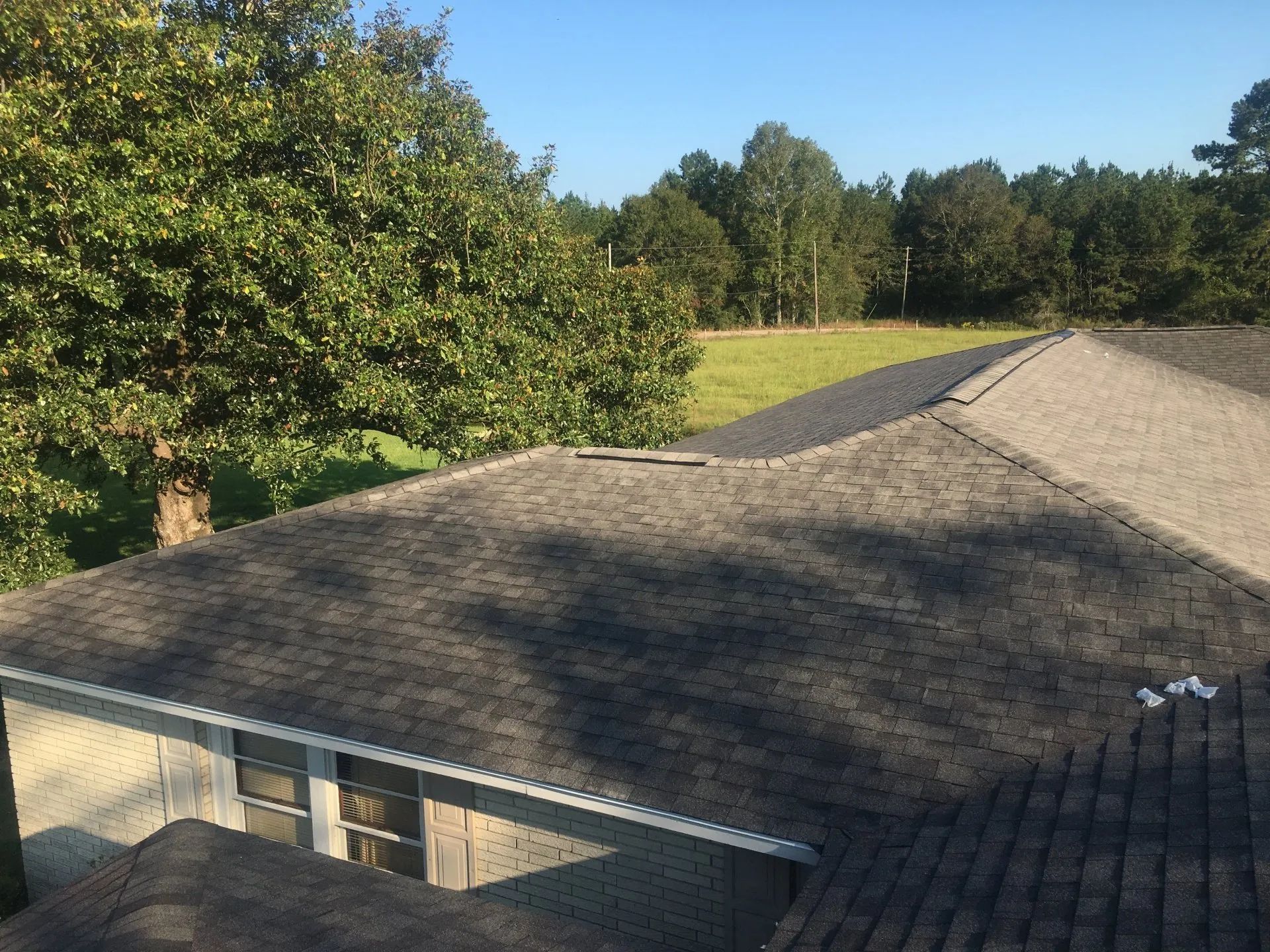
Look for bare or discolored patches. A section that looks noticeably darker or a different texture than the surrounding shingles is often exposed felt or decking where a shingle blew off completely. That patch is the highest priority to note, because there's currently nothing but underlayment, or in some cases bare wood, between your attic and the sky.
Check the yard, gutters, and downspout runoff, and note where the damage clusters.
Whole shingles or fragments on the ground are the obvious sign, but a heavier-than-usual dusting of granules in the gutter also points to shingles abraded or stressed by wind and hail without necessarily lifting or tearing. Ridges, rakes (the sloped edges of the roof), hips, and the field of roof closest to the direction the storm came from usually take the worst of it, since those areas see the most direct wind pressure and uplift. Wherever the damage is concentrated tells a roofer where to start looking before they ever climb up.
Missing Shingles and Lifted Shingles Are Different Problems
It's worth separating these two, because they don't carry the same urgency, and treating them the same way means either overreacting to something minor or underreacting to something that needs attention now.
A missing shingle is an active entry point. The moment a shingle is gone, whatever's underneath it, felt underlayment at best, exposed decking at worst, is the only thing standing between your attic and the weather. Underlayment buys some time, but it isn't a long-term roofing surface on its own, and the next rain event is a real risk to that specific spot.
A lifted shingle is a broken seal, not necessarily an open hole. As long as the shingle is still there, still nailed down, and still generally lying over the course below it, you likely don't have bare decking exposed. What you have instead is a spot where wind-driven rain can work its way sideways and underneath during the next storm, a real problem, just a quieter and slightly less time-critical one than a missing shingle.
Both deserve a look, but the order matters.
Missing shingles and any spot with visible bare underlayment or decking go to the top of the list. Lifted shingles matter too, since an unrepaired lift is often the reason the next windstorm turns into a missing shingle, but they're less likely to leak before someone gets out to look.
Tip: Take a few photos of every damaged or suspicious area right after the storm, from the ground, before anything shifts, blows away further, or gets rained on again. Photos dated to the day of the storm make it much easier for a roofer to confirm what happened and when, and they give you a record of the roof's condition before any repair work begins.
Why a Lifted Shingle Doesn't Always Settle Back Down on Its Own
It's tempting to watch a lifted shingle for a few warm, sunny days and assume the problem solved itself once it looks flat again. Sometimes that's close to true. Often it isn't.
The sealant bond needs heat and pressure to reform, and it doesn't always get both. The adhesive strip that bonds one shingle course to the next is designed to soften and re-bond under sun exposure, which is why a shingle that lifted slightly in a brief gust can sometimes reseal itself over the following days. But a shingle that's been bent, creased, or pulled far enough that it's no longer sitting flush against the course below it often can't make that bond again without help, even with plenty of sun and heat afterward.
A shingle can look settled and still be loose underneath, and repeated lifting fatigues it further.
Visual flatness from the ground doesn't confirm the seal reformed, and a shingle that appears to have laid back down while the bond stays broken gives the next storm an easier time lifting that same spot again, often further than the first time. Every cycle of lifting and settling also flexes the mat and stresses the area around the nail heads a little more, which is why a shingle that's moved in two separate storms is measurably more likely to fail outright in a third.
Warning: Don't climb onto the roof yourself to press a lifted shingle back down or check it up close in the hours or first day or two after a storm. Wet shingles are far more slippery than dry ones, storm debris you can't see from the ground may be sitting on the roof surface, and a roof deck that took wind and hail stress can have soft or weakened spots that aren't obvious just from walking across them. A ground-level check covers what you need to know before deciding whether and how urgently to get someone up there.
What a Proper Post-Storm Roof Check Actually Covers
When it's time for someone to get on the roof, whether that's a day after the storm or a week, a thorough check goes well past the spots you could already see from the yard.
The edges and high points get checked first. Rakes, ridges, hips, and roof penetration perimeters face the strongest wind pressure, so these areas receive close inspection, even when nothing appears obviously damaged from ground level.
Every shingle in the affected zone gets tested, not simply inspected visually, while nail heads are checked. Tabs may look secure but remain unsealed, so lifting them slightly confirms whether the adhesive bond actually holds properly.
Flashing receives separate attention, while the attic gets inspected when accessible. Chimneys, vents, and skylights can loosen during storms without visible gaps. Inside, daylight, damp insulation, or musty odors may reveal hidden moisture before stains appear.
What Happens If You Leave It Alone
A handful of lifted or missing shingles rarely turns into a full roof failure overnight, but leaving storm damage unaddressed does compound in a few predictable ways.
Open spots grow with each additional wind event. A missing shingle exposes the edges of the shingles next to it, giving the next windstorm an easier foothold than it had before. What starts as one displaced shingle can turn into a small cluster after just one more round of severe weather.
Water finds the path of least resistance over time. A slow leak around a lifted shingle or an exposed nail doesn't announce itself the way a sudden downpour through an open hole does. It can travel along the underlayment or a rafter for a surprising distance before it shows up as a stain, so the visible damage inside the house often understates how long water has actually been getting in.
Granule loss accelerates once the surface is compromised,
and a shingle that's been lifted, creased, or partially torn loses its protective mineral coating faster than an undisturbed one nearby, shortening its remaining service life even if it never leaks at all.
Frequently Asked Questions
How soon after a thunderstorm should I check my roof?
Check from the ground once it's safe and the wind has fully died down. A closer, on-roof inspection can usually wait a few days unless you see active leaking, a flapping shingle, or damage near a chimney or vent.
Can I just nail a lifted shingle back down myself?
Nailing alone doesn't restore the sealant bond that keeps water out between courses, and a misplaced nail can create a new leak point. A proper repair usually involves resealing the shingle with roofing cement in the right spots.
What does exposed decking actually look like from the ground?
Usually a patch noticeably darker or a different texture than surrounding shingles, rougher and matte if felt underlayment shows, or a distinct color if bare wood is visible. When unsure, treat it as worth confirming.
Is it normal for a few granules to wash off during a storm?
Some granule loss happens on every asphalt roof over time, and a light amount after hard rain isn't a red flag on its own. A heavy, sudden buildup paired with lifted or missing shingles points to wind or hail stress worth checking.
How many lifted shingles is too many to fix one at a time?
There's no fixed number, but the pattern matters more than the count. A few isolated shingles is usually a quick repair. Damage spread across multiple slopes or concentrated along a ridge often points to a broader issue worth a full inspection.
Reading Storm Damage Right Protects Your Roof
A storm doesn't leave a roof in one of two states, fine or ruined. Most of the time it leaves something in between: a few shingles needing attention, a couple of nail heads needing resealing, maybe one spot where the underlayment is showing and needs covering before the next rain. Learning to read that in-between state from the ground, and knowing which signs can't wait, is what keeps small storm damage from growing into a bigger repair down the road.
T-Rob Roofing and Painting Services
has spent 20
years working roofs and exteriors across Brookhaven and Jackson, MS, and that experience shows in how thoroughly a post-storm inspection gets handled, testing every shingle in the affected area, checking flashing and nail heads a ground survey misses, and covering any exposed underlayment before the next system arrives. That kind of attention is what separates a roof that quietly holds up through the next storm season from one that keeps surprising its owner.